Probiotics have become the poster child of gut health.
And for good reason. The bacteria in your gut play a powerful role in digestion, bloating, regularity, immune function, mood and how comfortable you feel in your body day to day.
But if you have ever taken a probiotic and still felt bloated, heavy, gassy or irregular, you are not alone.
The issue is not that probiotics do not matter. They do. The issue is that they are often expected to do too much on their own.
At JERMS, we believe your gut is a system. So it needs support that thinks beyond a single ingredient.
The quick answer
Probiotics may help support bloating and IBS-style symptoms for some people, especially where gut bacteria are part of the picture. But bloating, gas and digestive discomfort are rarely caused by one thing alone.
Your gut may also need prebiotics to feed good bacteria, postbiotics to support the gut environment, digestive enzymes to help break down food, hydration, regular meals and consistency.
A probiotic can be useful. But complete gut care looks at the whole ecosystem.
What probiotics actually do
Probiotics are live beneficial bacteria.
They are designed to support the balance of bacteria in your gut microbiome, which can influence digestion, regularity and how reactive your gut feels.
For some people, taking a probiotic consistently may help reduce bloating, trapped wind or IBS-style discomfort. But different strains behave differently, and results can vary from person to person.
This is one reason probiotics can feel confusing. One person swears by them. Another notices nothing. Another feels more bloated at first.
That does not mean anyone is wrong. It means the gut is individual, and bacteria are only one part of the story.
Why probiotics alone may fall short
A probiotic adds bacteria. But those bacteria still need the right conditions to thrive.
If your diet is low in fibre, your digestion feels sluggish, stress is high, you are dehydrated, or food is not breaking down smoothly, a probiotic alone may not be enough to shift how your gut feels.
Think of it like planting seeds in soil.
The seeds matter, but so does the soil, water, light and daily care. Without the right environment, even good seeds can struggle.
Your gut works in a similar way. Beneficial bacteria need fuel, support and consistency.
Bloating is not always just a bacteria issue
Bloating can happen for lots of reasons.
It may be linked to gas production, constipation, slow digestion, food sensitivity, eating too quickly, stress, hormonal shifts, IBS or changes in your gut microbiome.
This is why a single-ingredient approach can be frustrating. If your bloating is partly linked to sluggish digestion, digestive enzyme support may be relevant. If constipation is part of the picture, fibre, hydration and motility support may matter. If stress is a major trigger, nervous system support and meal rhythm may help.
A probiotic may support one important part of the picture, but it does not necessarily support every reason your gut feels uncomfortable.
IBS-style symptoms often need a wider approach
IBS is not one single symptom. It can involve bloating, constipation, diarrhoea, cramps, trapped wind, urgency or a gut that feels unpredictable.
Because IBS-style symptoms can have multiple drivers, support often needs to be layered.
That might include identifying food triggers, looking at fibre intake, eating more regularly, managing stress, supporting the gut microbiome and seeking professional guidance if symptoms are persistent or severe.
This is where “just take a probiotic” can feel a little too simple.
For some people, probiotics are helpful. For others, they are only part of what their gut needs.
The role of prebiotics
Prebiotics are a type of fibre or compound that feeds beneficial gut bacteria.
If probiotics are the bacteria, prebiotics are the food that helps support them.
Prebiotic-rich foods include things like oats, flaxseed, artichoke, chicory root, onions, garlic, beans, lentils, fruit and vegetables.
Without enough fibre and prebiotics, beneficial bacteria may not have the fuel they need to grow and flourish.
This is why adding a probiotic without thinking about prebiotics can feel incomplete.
The role of postbiotics
Postbiotics are beneficial compounds linked to microorganisms, including inactivated microorganisms or their components.
They are part of the wider gut health picture because they help support the gut environment, even when they are not live bacteria.
Postbiotics are one of the reasons the gut health conversation is moving beyond “how many CFUs does it have?” and into a more thoughtful question: how does this product support the gut ecosystem as a whole?
The role of digestive enzymes
Digestive enzymes help your body break down food.
This matters because bloating can sometimes happen when food does not feel like it is moving through or breaking down smoothly. You might feel heavy after meals, swollen by the end of the day, or like certain foods sit in your stomach for too long.
Enzymes do not replace your body’s own digestive process, but they can be a useful layer of support in a complete gut health formula.
What a more complete approach looks like
A more complete gut routine supports multiple parts of the digestive system at once.
That means:
- Beneficial bacteria
- Food for those bacteria
- Support for the gut environment
- Digestive enzymes
- Fibre and hydration
- Regular meals
- Gentle movement
- Stress support
- A routine that is easy enough to repeat every day
This is not about doing more. It is about doing the right things together.
Where JERMS fits
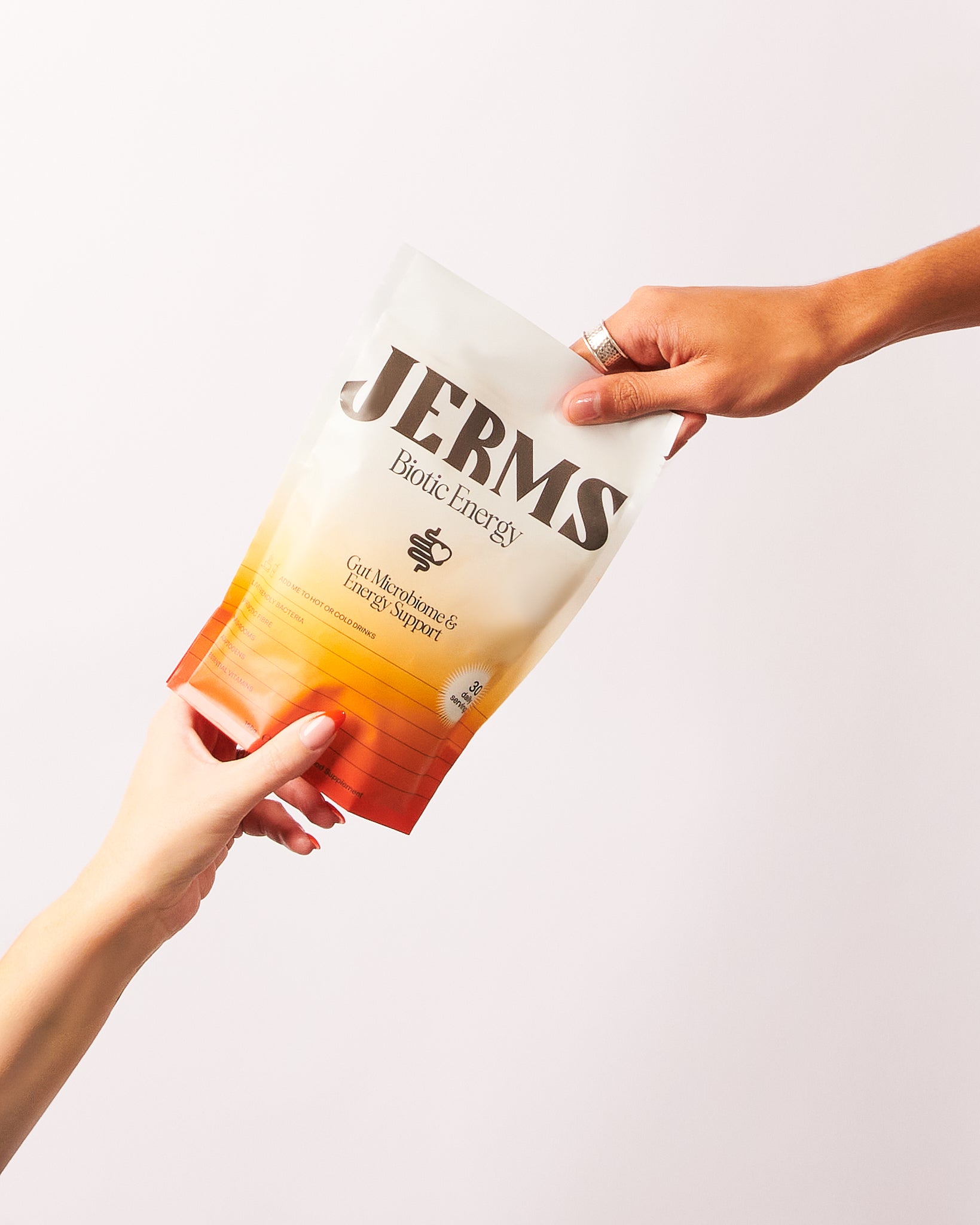
Daily Gut was created for people who want more than a standard probiotic.
It combines prebiotics, probiotics and postbiotics with digestive enzymes, superfoods and Feiolix® to support microbiome balance, smoother digestion, cravings, metabolism and everyday gut comfort.
It is designed for the gut that feels bloated, irregular, reactive or easily thrown off. The kind of gut that needs a little more than one ingredient and a little less confusion.
Mix it once a day into a cold drink, smoothie or yoghurt, and let it become your daily foundation for complete gut care.
The bottom line
Probiotics can be a helpful part of gut health support, but they are rarely the whole story.
If you are dealing with bloating, IBS-style discomfort, trapped wind or irregular digestion, your gut may need more than bacteria alone.
It may need feeding, soothing, digesting, hydrating and supporting consistently.
Because your gut is a system. Support it like one.